Politics and Music
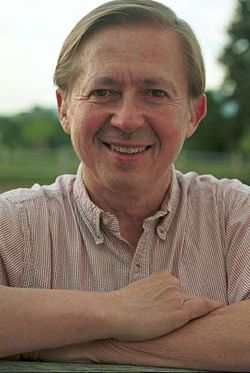 via www.windrep.orgLast night I was at the Illinois Music Educators' Association Conference (IMEA) to perform with the Illinois Wind Symphony. Prior to our performance I was walking through the exhibit hall, checking out the new book and CD offerings (and sampling the occasional piece of cheesecake or pizza).
While I was at a CD booth I overheard a customer talking to the salesman about David Maslanka. My ears perked up because he is one of my favorite contemporary composers. Most of what I've heard about him from other people has been complimentary. But this person took a different angle.
The jist of what he said was that he was fond of Maslanka's music, until he discovered Maslanka's politics. The paton followed that up by saying that he was going to focus on composers (presumbly for his ensemble to perform) who are Republican.
This caught me off-guard, because I usually don't think of composers in political terms. When I do, I usually am not in disagreement because of my decidedly left-leaning political views, and thus it doesn't negatively affect my opinions of their music.
Knowing what I know about Maslanka, and for the sake of this discussion, I'd like to add the composer's religious/spiritual views in to the mix. (That may not have been implied in what the patron above said, but I want to expand the topic.)
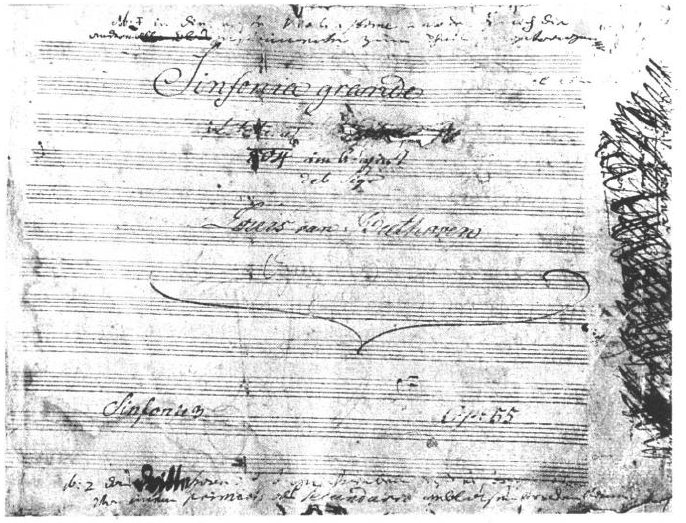 via www.wikimedia.orgThere are some notable examples of composers who's politics we know, especially before our contemporary era: Beethoven (at least regarding his Eroica Symphony); Wagner; Richard Strauss. Of some more modern composers, we know of Copland's and Bernstein's political views. We know of Bach's religious views, among others.
In some clear cases, these views influenced their compositions. Maslanka wrote a Mass that includes the Latin mass, but also includes poetry by Richard Beale called “Hymn to Sophia, Holy Wisdom," talking about the Sophia wisdom of ancient Christianity, and his recent Give Us This Day - partly based on a Bach chorale like so much of Maslanka's music is - is influenced by a book by Thich Nhat Hanh.
But I can't imagine avoiding composers because of their political or religious view points, and the influence those views have on their music. Again, maybe it's because I typically tend to agree with composers, politically at least. Spiritually, though, that's more up in the air. I don't frequently attend church (maybe it's a symptom of being a PK), yet I find Bach's church music and Bernstein's Mass some of the most moving music I've heard or performed.
In my opinion, I don't think we should separate the composer from the larger society. A composition might be that person's way of speaking to larger truths or struggles of his time. ("His" being a generic term, not one implying a specific gender.) But at the same time, should we avoid those who hold views we don't share, even if it doesn't come across plainly in their music?
I'm interested in hearing what you think. Do you take politics and spirituality into consideration when listening or performing? Should we? Should we pretend that the composer doesn't hold those views, that he's separate from society? How should we let these views affect our understandings of his music?